Everyone is on the Marketing Team

Who holds responsibility for marketing? While we as marketers certainly like to say we are in charge of our domain, the truth is, just about everyone in your organization plays a part.

One of publishing’s best known anecdotes tells how 10 years following initial publication of Stephen King’s The Stand he published an expanded edition. He explained that the original release required cutting about one-third of his content. This request came neither from editors nor publishers, who loved the book and cheered the full content. Instead it came from the accounting department. It did not matter how good the story was, the number crunchers said. A book that big would cost more than the market for Stephen King books could bear at that time.

This real-life example demonstrates how responsibility for marketing involves more than the department, sales force, or advertising. In this case offering a quality product with an appealing design to an established market following advanced promotion did not suffice for a realistic marketing plan. Notice that even those elements involve editing, art, design, sales, advertising, marketing, and production staff already. Despite all that, one of the most crucial marketing factors — product cost — meant that a massive work of literature needed one out of every three words cut.

Advertising is an important part of marketing, and you may say, “Advertising makes me buy products or services.” But if you ask a group of 19-year-olds what kind of toothpaste they use, about 90 percent of them use the same toothpaste they did when they were 6 years old. In this case, what determined the brand of toothpaste a 19-year-old uses? It’s whatever their parents bought, rather than advertising. Their parents might have thought about the purchase partially based on advertising, but it’s about a lot of other things. Likewise marketing and how it impacts consumers is much more than just advertising.

Modern marketing must overcome existing marketing momentum, such as the power of social media and search engines. This challenge only begins with official company sites. In 2009 a Domino’s Pizza employee in Conover, NC damaged the entire brand by posting a video on YouTube showing him tainting products. That video made its way around the world. ABC News credits Domino’s with proactive response, and using the same social media that distributed the content as vehicles to counteract the damage.

One employer takes a different route to enlist all employee personal influence in marketing. A New York City CBS affiliate reports that the CEO of Rapid Realty offers his employees a 15 percent raise for getting a tattoo of the company logo — any size, any place. So far 40 employees have accepted the offer. One commissioned employee expects it to mean $25,000 to $40,000 more in her paycheck over a year. Human Resources may be the most neglected department in marketing strategies, even though it hires everyone involved.

Through team and morale building activities it engages greater interaction among departments. It is also best positioned to recognize employee aptitudes conducive to a positive company image. The best employees to promote a solid company image may not be in a marketing role at all right now. So even when the Marketing knows customer desires, it takes Research & Design to figure out how to make it happen, and Production to give it shape. It takes everyone on the team to preserve a viable public image, and share what the company intends.


By Doug Stayman, Associate Dean for MBA Programs, Associate Professor of Marketing, Cornell University Johnson Graduate School of Management
Smart Social Media Policy Starts With Managers: 5 Key Questions to Ask

With social media, what you don’t know can seriously hurt your organization. One 2010 survey found that employees estimate spending roughly four hours every day checking multiple email accounts, with up to two hours spent on social media sites like Facebook and Twitter. A 2012 Salary.com survey found that 64 percent of employees visit non-work related websites daily. And don’t think blocking employee access to social media on company networks is the answer; personal smartphones and tablets are ubiquitous, and easily fill the gap.

The rub for today’s organizations is that while social media use at work has definite risks, it also is one of the best ways to empower and engage employees. Increasingly, in our connected 24/7 businesses, the line between work and personal time is blurring. This is especially true for Generation Y employees; as long as they meet deadlines and deliver, these employees don’t feel that it’s particularly useful to distinguish between time spent updating Twitter or engaged in team meetings. Organizations may beg to differ, especially when an offensive or inappropriate blog post or tweet can damage their brand, lower employee morale, and even lead to workplace lawsuits.

Yet, most organizations don’t really know how their employees are using social media, either personally or professionally, let alone what impact it’s having on employees’ overall levels of productivity.

That’s why it’s so important, before you set policy, to know how your managers currently handle social media use at work, as well as how its use by employees is effecting their management. Get at these fundamental issues by asking managers five key questions:

  1. Have your employees’ use of social media ever triggered a workplace lawsuit or regulatory investigation?
  2. What impact have your employees’ personal use of social media during work hours had, if any, on their productivity?
  3. How do you use social media, if at all, to help manage your projects and employees?
  4. Have you reviewed all applicable federal and state laws governing electronic data content, usage, monitoring, privacy, e-discovery, data encryption, business records and other legal issues in all jurisdictions in which you operate, have employees or serve customers?
  5. Could you comply with a court-ordered “social media audit”, by producing legally compliant business blog posts, email messages, text messages and other electronically stored information (ESI) within 990 days?

Social media can speed innovation and collaboration, but ONLY if your employees know how to both use it as well as steer clear of its many pitfalls. Start by asking managers these simple questions; they often surface extremely important information that, especially in larger organizations, you may not have been aware of. Finally, remember that for reasons of both confidentiality and fear, getting access to this sort of information is not always easy. It’s therefore important that organizations create mechanisms by which examples of social media use (and abuse!) can be regularly shared with the broader employee base.

Guest Post on Women of HR


By Steve Miranda

Steve Miranda is Managing Director of Cornell University’s Center for Advanced Human Resource Studies (CAHRS), a leading partnership between industry and academia devoted to the field of global human resource management. He is also a faculty author of the new eCornell certificate program,Social Media in HR: From Policy to Practice. Prior to CAHRS, Miranda was Chief Human Resource and Strategic Planning Officer for the Society for Human Resource Management (SHRM), the world’s largest professional HR association, serving over 260,000 members in over 100 countries.

Smart Social Media Policy Starts with Manager: 5 Key Questions to Ask

With social media, what you don’t know can seriously hurt your organization. One 2010 survey found that employees estimate spending roughly four hours every day checking multiple email accounts, with up to two hours spent on social media sites like Facebook and Twitter. A 2012 Salary.com survey found that 64 percent of employees visit non-work related websites daily. And don’t think blocking employee access to social media on company networks is the answer; personal smartphones and tablets are ubiquitous, and easily fill the gap.

The dilemma for today’s organizations is that while social media use at work has definite risks, it also is one of the best ways to empower and engage employees. Increasingly, in our connected 24/7 businesses, the line between work and personal time is blurring. This is especially true for Generation Y employees; as long as they meet deadlines and deliver, these employees feel that it’s not particularly useful to distinguish between time spent updating Twitter or engaged in team meetings. Organizations may beg to differ, especially when an offensive or inappropriate blog post or tweet can damage their brand, lower employee morale, and even lead to workplace lawsuits.

Yet, most organizations don’t really know how their employees are using social media, either personally or professionally, let alone what impact it’s having on employees’ overall levels of productivity.

That’s why, before you set policy, it’s important to know how your individual contributors currently leverage social media use at work, as well as how its use is handled by theirmanagers. Get to the heart of these fundamental issues by asking managers five key questions:

  1. Have your employees’ use of social media ever triggered a workplace lawsuit or regulatory investigation?
  2. What impact has your employees’ personal use of social media during work hours had on their productivity, if any?
  3. How do you use social media to help manage your projects and employees?
  4. Has someone helped you and your employees review all applicable federal and state laws governing electronic data content, usage, monitoring, privacy, e-discovery, data encryption, and business record retention? What about updating you on other legal issues in the various jurisdictions in which you operate, have employees or serve customers?
  5. Could you comply with a court-ordered “social media audit?” That is, could you produce legally compliant business blog posts, email messages, text messages and other Electronically Stored Information (ESI) within 99 days?

Social media can speed innovation and collaboration, but ONLY if your employees know how to fully leverage it as well as steer clear of its many pitfalls. Start by asking managers these five simple questions. They often surface extremely important information that, especially in larger organizations, you may not have been aware of. Finally, even if your employees have been using social media without incident for some time now, it’s still a very good idea to fully educate them. As the old proverb goes, “No matter how far down the wrong road you’ve gone, turn around!”

Tags:  Social Mediasocial media policyHR Policies

 Guest Post on We Know Next

By Steve Miranda

Steve Miranda is Managing Director for Cornell University’s Center for Advanced HR Studies (CAHRS) as well as the Founder and President of “Four Forces Consulting, LLC.” Prior to joining Cornell, Steve was the Chief HR Officer for the Society for Human Resource Management (SHRM), the world’s largest professional HR association, serving over 260,000 members in over 125 countries. Before SHRM, Steve was a HR VP at Lucent Technologies (currently Alcatel-Lucent). At Lucent, Steve spent 3-1/2 years in Hong Kong providing HR leadership for Lucent’s 14,000 person Asia-Pacific business. He also led the development of HR strategies for Bell Laboratories, the world famous R&D engine that has generated seven Nobel Prizes over the past 70 years. 

Steve currently sits on the Board of Directors for the Ethics Resource Center (ERC) and the Council for Adult Experiential Leaning (CAEL). He is also advisor to three different start-up organizations as well as a past United States representative to the North American HR Management Association (NAHRMA). His team’s work has appeared in the Harvard Business Review, Wall Street Journal, National Public Radio, the BBC and many others. Steve has presented at multiple events worldwide, including the American Chamber of Commerce, The Chinese Ministry of Personnel Development and the National Institute for Health. He is a well know HR executive in the Washington DC area and a highly respected member of the Human Resources profession. He also teaches at the graduate level as an adjunct professor at Cornell University, Georgetown University and the Sasin business school of Chulalongkorn University in Thailand.

“Steve is the author of eCornell’s new online course Designing and Implementing Effective Social Media Policies. The course is one of three that make up the Certificate in Social Media in HR: From Policy to Practice, offered in partnership with the ILR School at Cornell University.”

Steve holds an undergraduate degree in Liberal Arts and a Masters degree in Computer Science (both Summa Cum Laude) from the University of Detroit.

3 Reasons You Must Constantly Innovate

Let’s say your company is the clear market leader: your product was the first on the field. Nobody else comes close in terms of quality and customer service. Maybe you even hold a patent. In that case, you can relax. There’s no immediate need to focus on research and development or new innovations, right? Wrong. There are three critical reasons that all firms need to constantly innovate.

1. Pioneering advantage

The first entrant into the marketplace maintains a competitive edge, and you want to be the market leader: not only in terms of being out there first, which puts you in a position to enjoy a monopoly-like status, but also to position yourself to be able to capitalize on that early win.

 2. Product life cycle

History shows that sales of products will grow initially after introduction, but they’ll decline over time. To maintain market share, you’re going to have to introduce new products that customers want. As you’re considering how to innovate, you’ll want to use marketing research methods that help you identify consumers’ wants and needs.

3. Market share will erode as competitors move in

This is true particularly in the case of patent holders whose patents expire, such as pharmaceutical companies whose market share for their patented drug erodes when generics come on the market and begin to compete. Analyzing customer preferences and using that data to drive innovations will position you to maintain market share.

Demand Management: A Deep-Dive

Success in the hotel business hinges on getting demand management right. It’s a key driver in hotel operations, revenue optimization and overall customer experience.

Today we give you an entire chapter on demand management from The Cornell School of Hotel Administration on Hospitality bookIn this chapter written by Cornell Professor Bill Carroll, you’ll get both a broad overview and incredibly detailed instruction on how to manage demand at your hotel. This chapter on demand management is an absolute must-read for anyone in hospitality working at the crossroads of revenue generation and customer service.

Permission to redistribute Dr. Carroll’s chapter courtesy of Wiley Publishing.

From the publisher: This cutting-edge and comprehensive book—with contributions from the star faculty of Cornell University’s School of Hotel Administration—offers the latest thinking on the best practices and strategies for hospitality management. A must for students and professionals seeking to enter or expand their reach in the hospitality industry, The Cornell School of Hotel Administration on Hospitality delivers the authoritative advice you need to:

  • Develop and manage a multinational career and become a leader in the hospitality industry
  • Maximize profits from franchise agreements, management contracts, and leases
  • Understand and predict customer choices, and motivate your staff to provide outstanding service
  • Manage hospitality businesses and the real estate underlying the businesses
  • Control costs, coordinate branding strategy, and manage operations across multiple locations


The Moneyball Effect: How Data Will Transform Student Success in 10 Years

In his 2003 book “Moneyball,” bestselling author Michael Lewis chronicled the 2002 Oakland Athletics baseball team’s unprecedented run to win their division championship through a specialized analysis of baseball data called “Sabermetrics” (also referred to as “Moneyball”).

By analyzing objective, evidence-based data on historical player performance, the cash-strapped Oakland team built a repeatable, winning strategy that challenged conventional baseball wisdom. More than a decade later, the vast majority of professional sports teams — including the Dallas Mavericks, Los Angeles Clippers and Tampa Bay Rays — now employ statisticians and data analysts to turn player data into actionable coaching insights.

Just as player analytics have transformed decision making in professional sports teams, higher education and learning organizations will use student analytics to transform teaching models, better meet students’ needs and improve learning outcomes over the next decade.

Let’s explore how three types of learning analysis — predictive, adaptive and personalized — will harness the power of student metrics to impact performance.

1. Predictive learning analysis

Whether online or in the classroom, students today interact with various data systems. Learning management and student information systems are chronicles of students’ past and current learning activities. By analyzing this data using evidence-based research, organizations can identify trends, behaviors and patterns to better predict student outcomes at the individual and group level.

For example, learning organizations will analyze:

  • Time spent in class and online, relative to course completion rates;
  • Engagement with faculty, relative to outcomes;
  • Interim assessment scores, relative to final grades; and
  • Prerequisite knowledge and coursework, relative to success rates.

The most powerful predictive data is historical data, so it will be the accumulation of data longitudinally that will become particularly predictive and interesting. With predictive analysis, organizations will gain objective insights into student behaviors and the ability to adapt and personalize future learning to improve student retention and success.

2. Adaptive learning analysis

Combined with predictive analytics, organizations will use adaptive learning analysis to identify individual student needs and quickly intervene to improve the odds of success. Student metrics — such as learning time, response latency, engagement levels and assessment results — form the basis for these analyses.

Armed with these insights, instructors will:

  • Redefine student inputs based on successful outcomes;
  • Adapt assessments, relative to past performance;
  • Adjust student interaction dynamically;
  • Provide on-demand tutoring based on responses; and
  • Offer real-time prompts, clues and grading.

Beyond simply making adjustments to the course materials and delivery pace to improve student retention and outcomes is the ability to constantly and iteratively test those changes. As suggested in a recent article by Chris Proulx, “Three Archetypes of the Future Post-Secondary Instructor,” he suggests the emergence of the “Course Hacker” role in higher education, where:

“…the Course Hacker would be a faculty member with strong technical and statistical skills who would study data about which course assets were being used and by whom, which students worked more quickly or slowly, which questions caused the most problems on a quiz, who were the most socially active students in the course, who were the lurkers but getting high marks, etc.  Armed with those deep insights, they would be continually adapting course content, providing support and remedial help to targeted students, creating incentives to motivate people past critical blocks in the course, etc.”

For example:

“The data tells us that this student is having a hard time getting through the materials in the allotted time. Let’s make Tweak A and see if that improves course completion. No? Let’s try Tweak B and compare the data.”

And as large-scale participation courses, such as MOOCs (massive open online courses), become more prevalent over the next decade, adaptive learning analysis will allow learning organizations to provide scalable, agile interaction to meet the unique needs of individual students.

3. Personalized learning

As organizations use analytics to better understand students’ distinct learning behavior profiles, it will open the door to personalized learning. Where adaptive learning is used to quickly intervene when students are struggling, personalized learning focuses on providing the student with choices to determine when, what and how they learn.

For example, organizations will personalize learning by:

  • Adjusting the pace of learning;
  • Creating personalized learning paths based on interest and existing knowledge;
  • Localizing the curriculum to regional or cultural needs;
  • Developing communities of similar students;
  • Offering alternate learning times to accommodate personal schedules; and
  • Using algorithms to dynamically create peer-to-peer relationships.

Winning: Data analytics to drive student performance

Already, new technology tools are making it easier for learning organizations to access and analyze student metrics. But data alone is not actionable information. Instead, learning organizations need objective analytics that help them predict, adapt and personalize their pedagogy to maximize learning outcomes online or in the classroom. Over the next decade, organizations that can do this, and do it well, will prove to be the winners.

Guest Post on The Evolllution

100% Occupancy? Let’s See If You Can Achieve It

Price and duration, or length of stay, are the two fundamental levers for revenue management. Successfully striking a balance between the two by managing length of stay is how you get your hotel closer to full occupancy.

See if you can achieve 100% occupancy in our Fill Your Hotel simulation by clicking the game below.

There are several different types of length-of-stay controls. One thing you might want to use during a busy period is called a “minimum length of stay.” Let’s say you have four busy nights and that you’re going to have some slow periods. You’re trying to decide which reservations to accept at the beginning of those four busy nights. If you have people who are willing to stay four nights, you’re going to be a lot more open to having them at your hotel than someone who’s only willing to stay one or even two nights.

Of course, leveraging length-of-stay controls is a delicate proposition: The last thing you want to do is turn away demand to the point where you end up with empty rooms.

To better understand how length-of-stay controls actually work, we suggest you try your hand with the Fill Your Hotel simulation, used in eCornell’s course, “Forecasting and Availability Controls in Hotel Revenue Management, taught by Dr. Sheryl Kimes. This activity simulates a length-of-stay tool as it relates to variable demand and overall occupancy rate.


Increase Your Brand Site Bookings with The Billboard Effect

When it comes to online distribution, hotels typically prefer to sell rooms through their own websites. Third-party sites, particularly those of online travel agents (OTAs), tend to be seen as competitors in terms of distribution—even though OTAs are instrumental in filling rooms that might otherwise go unsold.

When hotels are able to increase brand-site bookings by listing with an OTA, they are essentially tapping what’s called the “billboard effect.” This reservation benefit enables hotels to quickly tap wider markets through alignment with the right third-party OTAs.

For example, Intercontinental Hotel Group listed their properties on Expedia during the summer months of 2009-2011 and saw increases between 7% and 26% in reservations through their own channel. And remember: These are brand-site reservations that are increasing, not reservations made on the OTA sites.

Dr. Chris Anderson, an associate professor at Cornell University’s School of Hotel Administration, had published a small test of the billboard effect’s on the hospitality industry in a 2009 Center for Hospitality Research study. Now Anderson is back with a new and considerably larger analysis. And it confirms the power of the billboard effect in gaining additional brand-site bookings for hotels listed with OTAs.

Click here to receive both the original and expanded research studies from Cornell’s Center for Hospitality Research and learn how you can quickly increase your brand-site bookings through OTAs.


7 Ways You Can Use Vine to Market Your Hotel

It’s been nearly a month since Twitter launched its new video-sharing mobile application Vine, and it’s not just individuals taking advantage of these six second looping video clips, companies and hotels are joining in this new marketing opportunity too. This app, which is currently only available for the iPhone and iPod touch, allows users create videos which can be straight shots or stop-motion format (which is very popular) with no editing capabilities. Similar to Instagram, the videos can be tracked by hashtags and subject matter as well as Vine’s 12 organization categories such as food, travel, and even how-to.

In just a few weeks, one of the major groups to attach to the new app is not surprisingly travelers, many posting brag-like videos of how great their hotels are. Six seconds can capture an entire tour from the front of your building, through the lobby, into the bar, into the room, and even a view from the balcony. Of the 30 or so videos I watched, at least ⅔ of them showed the bathroom amenities.

So how can you use Vine to market your hotel?

1. Virtual Tours

Make them yourself or encourage your guests to make them and tag your hotel to show off your space. You can do this with your different guest rooms, ballrooms, dining facilities, and even fun things to do around the property.

2. Welcome Message

Record from the point of view of an arriving guest to show prospective customers what a warm welcome you give the second they arrive at the front of the building.

3. How-To

Serving a special drink at the bar or specialty dessert at dinner? Try filming a short “how-to” make it and post it for all your guests so they can take their experience home with them.

4. Daily Menu

Why just post your beautiful nightly specials in just the printed menu? Why not show them off in a short series of styled stop motion videos to give guests something to think about all day?

5. Weather Reports

First thing in the morning, hop outside and film a few views from your hotel to show what it’s going to be like outside that day.

6. Contests

Ask your potential guests to submit their own Vine videos under a certain theme like “what is love” or “fun in the sun” and award the best video with a weekend getaway.

7. You: Behind the Scenes

Take the opportunity to show off your employees doing what they do best. Show off a little personality and you will humanize your brand and give customers a reason to connect emotionally with you.

While it is just starting to find it’s legs in a crowded media market and it’s unknown whether it will stick around, Vine is quite an entertaining opportunity to engage with your customers. Have you already jumped on the bandwagon? How are you using Vine? Or, if you’re new to the game, how would you use it to market your hotel?

Mobile Site vs Responsive Design Site – Which One is Right for You?

Lyena Solomon is the Director of Search for MileStone Internet Marketing, Inc. Anil Aggarwal, CEO, has appeared in eCornell’s Ask the Expert segments for our New Media Course for Hospitality Professionals.

Do you know any adults who do not have a cell phone? Probably not. In a recent study by comScore MobiLens, there is a steady growth in adoption of smart phones in the US. It is predicted that in November 2012, 53% of the US mobile subscribers owned a smartphone.

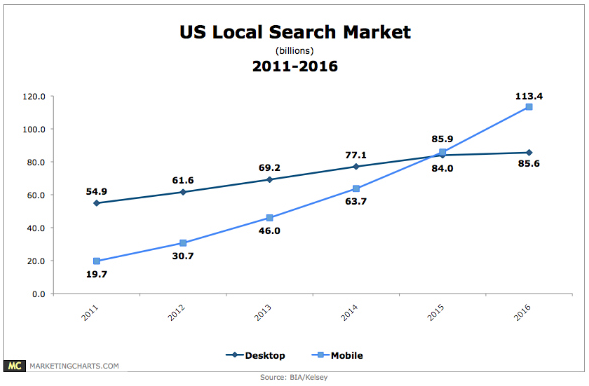
One of the most popular mobile activities is search. According to BIA/Kelsey, mobile searches will bypass desktop counterparts by 2015.

Source: https://www.marketingcharts.com/wp/direct/local-to-account-for-two-thirds-of-mobile-ad-spend-in-2016-21747/

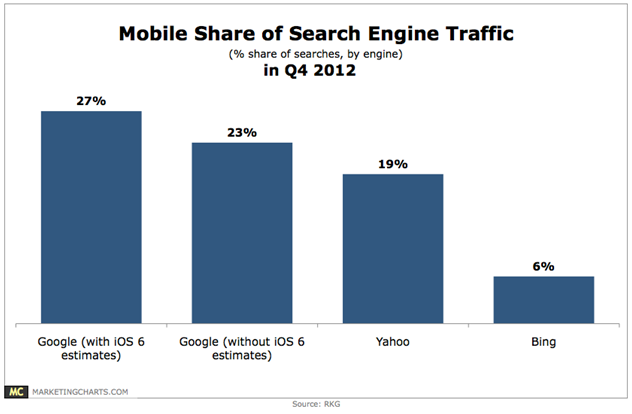
Most of the mobile searches happen on Google. RKG’s estimates 27% of Google searches will be via mobile in Q4-2013. Mobile share of organic and direct traffic is expected to rise as well.

Source: https://www.marketingcharts.com/wp/interactive/mobile-share-of-web-traffic-jumped-in-q4-2012-26057/

What do people search for? According to a February 2012 study done by Localeze and 15miles,  92% of US smartphone users look up information about local businesses on their mobile devices.  The same study shows that 86% of the local searches on tablets and almost 75% of mobile phone searches resulted in a purchase.

According to eMarketer, 20% of travelers in the US will make reservations on smart phones in 2013. Of course, in order to take a piece of the “mobile shoppers” market share, your website needs to be mobile accessible.  At Milestone, we see mobile traffic share anywhere from 25% to 42% on our clients’ sites. And the numbers are growing.

Moreover, cell phone users carry their precious devices with them all the time; and  according to Cisco Study, many check their devices every 10 minutes. A research done by Prosper Mobile Insights reveals that people are also planning to spend even more time on their mobile devices. The predicted number of people who plan to shop on their mobile devices has almost doubled in 2013.

If you are still not sure if you need a mobile website, the answer is a resounding “yes!”  The remaining question, however, is – in what kind of mobile website should you invest in?

Mobile website vs. Responsive design website

There are two options for you: mobile website and responsive design website.

Mobile website is a separate site, designed for mobile phones and mobile browsers.  It has a different overall design, sporting big buttons, click-to-call phone numbers, and lighter content that is focused for mobile user.  Mobile sites usually feature maps, directions, and simple forms.

The main benefit of having a mobile site is that you can target your mobile audience very well. You can put all the information they are looking for right at their finger tips. Your mobile site will work on smart phones as well as dumb phones.

The drawbacks are several.  Since your desktop site and mobile site are two separate entities, when you update your website, you will need to update your mobile site as well.  You will have to allocate internal resources for mobile site development and content re-writing and adjustment, like scaling down the images.  If you have a huge site, it might take a long time to scale the site down and determine what content to include in the mobile website. There are also some code adjustments you need to do for search engines. In addition, there are limitations on tracking your visitors and their actions on your mobile site.

If those drawbacks are deal breakers, then the second option might be best for your hotel.

Responsive Design – There are many benefits to responsive design. The main benefit is that once implemented, the website will scale based on what device was used by the visitor – desktop or laptop, mobile phone, or tablet.  Images, columns, navigation will all adjust to the device size and resolution, taking up the entire screen real estate. In addition, because you only have one single site, It requires little maintenance once implemented and is a good long term solution.  A responsive website benefits from exposure to all visitors – mobile or desktop – and steadily gains popularity on the website because of links and sharing.

Sounds perfect? Well, there are still some drawbacks.

The main consideration is that it will take a lot of resources to design and implement the new website layout. The first step is to define a fluid design and concept for the website. Next, the code and queries for responsive design must them be implemented on each and every page of the site. Yes, I mean it – each and every page. And because there are more codes, this can lead to higher download time. In this case, the site would need to be re-evaluated and adjusted to make it load faster.

But wait, that’s not it.  The website content then needs to be reviewed and edited to accommodate both desktop and mobile viewers. If the website has a lot of content, it will need to be reduced. It is important to be very selective about what content to keep and what can be deleted because every page can and will be accessible on every device. With a small screen and less time to browse, it’s important to present the most important content to mobile users. It is critical to have concise content, friendly navigation, and quick-loading images in order to delight mobile users.

There is an attempt by Google to help pick a mobile site solution for your business.  In their blog post, Google attempts to help businesses select the right solution by comparing available options.

What mobile solution is best for you?

Whether it’s responsive design or mobile website, it has to fit your business and your visitors.

We recommend responsive design if you have a small website that has similar goals for mobile and desktop visitors. It is also a good solution if your website has uniform content and not very complex.  If you are redesigning your website or just creating one, it might be a good idea to also invest in responsive design. One thing’s for sure – be ready for an extensive initial development.

If you have an established website, you might want to stick with your mobile site for now. When you are ready to redesign your website, plan for the extensive work on making your redesign responsive. Another reason to have a customizable mobile site is if your mobile visitors differ significantly from their desktop counterparts. If you, the business owner, have a different goal for those who use mobile devices to look at your website, you might be better off with a separate mobile website.

There isn’t a single “general” recommendation for a business mobile site.  Look at your business and select the appropriate option for you.

Milestone Internet Marketing offers both mobile sites and responsive design sites to our customers.   For more information about our mobile services or to get a pricing quote, call us at 408-492-9055 or email sales@milestoneinternet.com. We’d be more than happy discuss the options and pick the right solution that best fits your business’ needs.

This is reposted from the Milestone Internet Blog.